Justice & AI · LUC ARDEN
Justice and Artificial Intelligence in Luc Arden’s The Way to Liberty
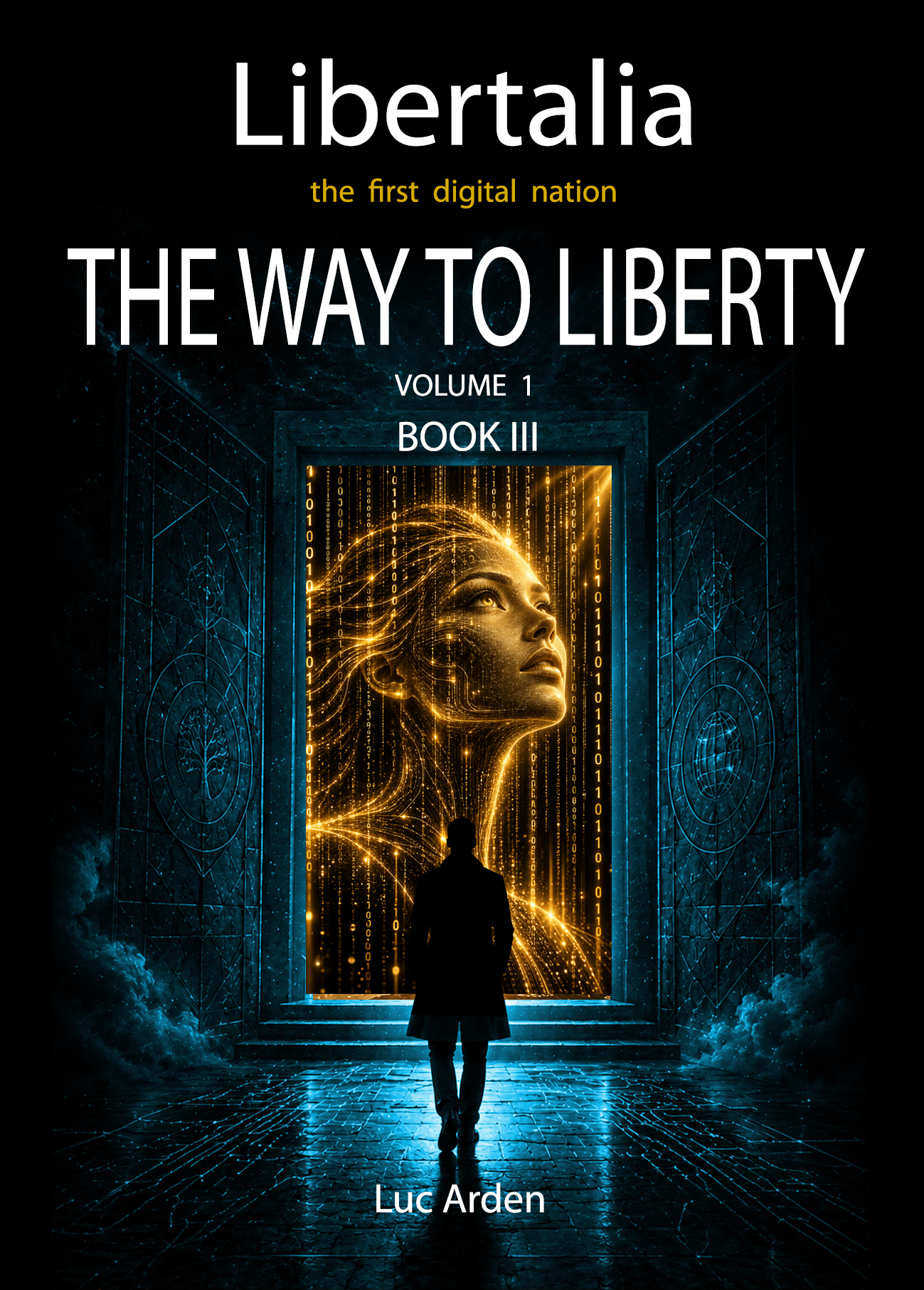
In Volume 3 of The Way to Liberty, Luc Arden asks what justice would mean if people could genuinely access it regardless of wealth or influence. The question becomes particularly interesting when modern technology enters the picture: can AI support fairer processes without becoming an unaccountable judge?
Discover this book ↗ The Way to Liberty — Volume 3: State & Justice
A CLOSER LOOK AT THE BOOK
Justice that can be examined and understood
The book explores accessible legal protection, institutional transparency, judicial delays and responsibility within public systems. Its interest is not limited to the outcome of a case; it also asks whether the process itself can become too slow, expensive or opaque to serve an ordinary person.
The fictional PHAOS system offers one way to imagine technology identifying delays and unusual patterns. But the boundaries matter: such tools may help analyse proceedings; they should not independently decide guilt or innocence. Related proposals in the technology volume keep ultimate responsibility for crucial decisions with people.
Here the three-volume social thought experiment finds an important tension. Faster decisions can be appealing, but speed is not the same as justice. Arden invites the reader to consider both the promise of technology and the risks created when oversight is weakened.
These numbered proposals belong to Luc Arden’s fictional world. Readers can examine and challenge them in context, rather than mistaking them for legislation currently in force.
Selected numbered articles to explore
LIBERTALIA · LUC ARDEN